Promote: Google Ads for SMBs
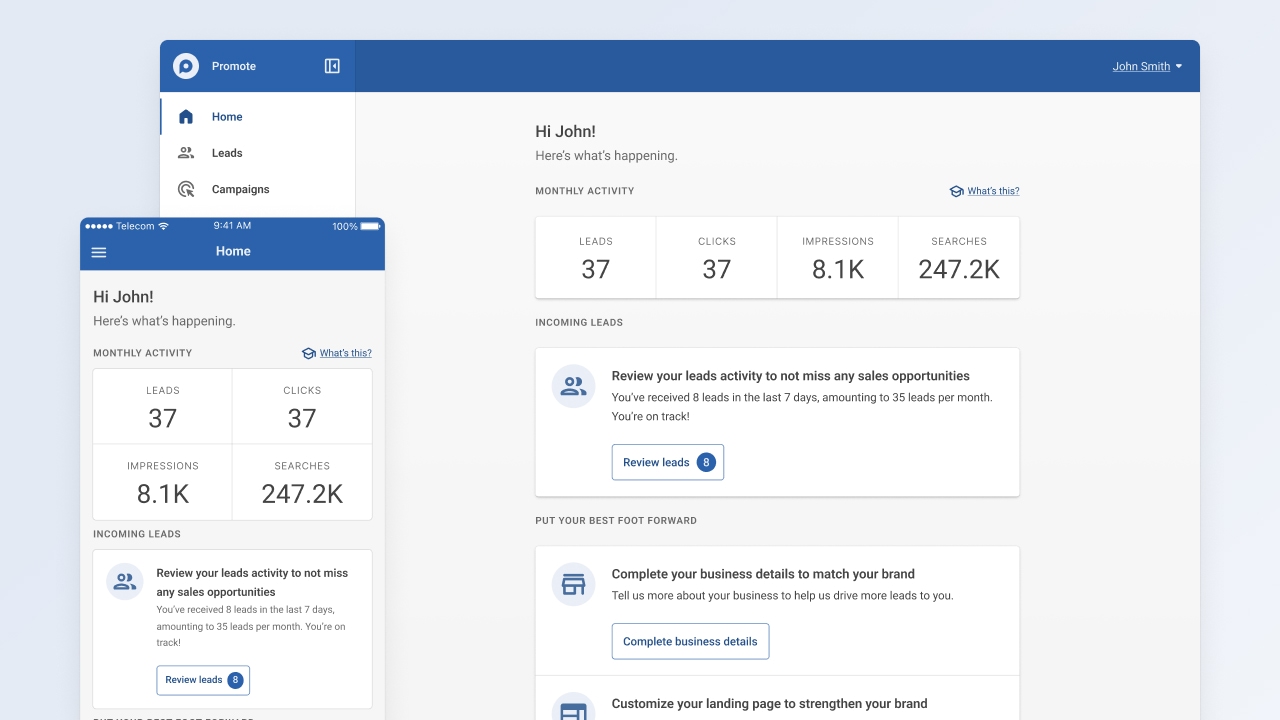
Led product and design for an ML-powered Google Ads platform targeting SMBs — built from scratch on Acquisio's ML infrastructure, distributed through agency and enterprise partnerships, and ultimately acquired by Web.com.
Impact
20
High-performing verticals identified to ensure ML efficiency.
2
Core assets required to get started, resulting in zero-friction onboarding.
Exit
Acquired by Web.com to address poorly served SMB market.
The Original Vision
Promote was conceived as a direct-to-SMB, self-serve advertising platform — a product that would democratize Google Ads by cutting out the agency middleman entirely. SMBs had been burned repeatedly by agencies promising results they couldn't deliver. The opportunity was to give them direct control, radical pricing transparency, and ML-powered campaign management that actually worked at their budget level.
That was the product I was hired to build.
A Change of Direction
Midway through the build, Acquisio's stakeholders — whose core business was built on agency relationships — made the call to focus on a whitelabel model. A biz dev hire was brought on to secure partnerships with agencies and enterprise partners. The GTM shifted from direct PLG to B2B2C distribution through existing channels.
I pushed back. The decision stood.
So we built the best version of the product that was possible within that model.
Zero-Friction Campaign Launch
An SMB (or their agency) needed only three inputs to go live — their vertical, geolocation, and budget. The ML handled everything else.
ML-Automated Campaign Management
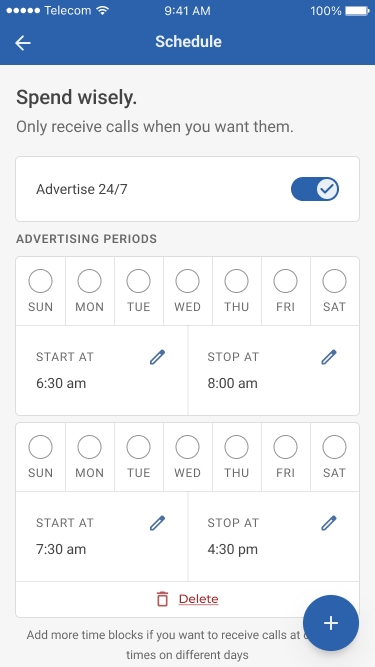
Acquisio's ML handled bid optimization, keyword selection, and campaign pacing — removing the expertise barrier that had historically locked SMBs out of effective paid search.
A Closed-Loop Funnel
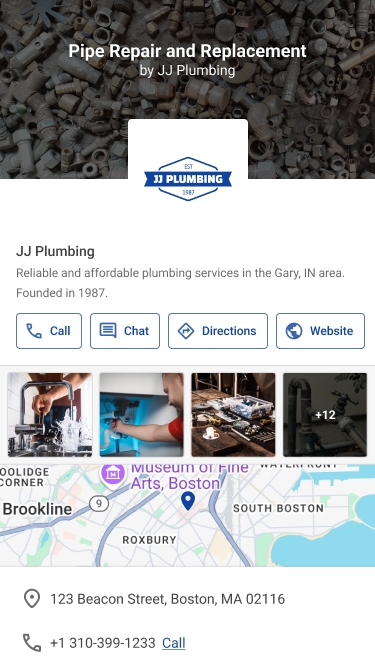
Promote didn't just launch ads — it owned the entire funnel. Ads drove traffic to whitelabeled landing pages generated by the platform, branded to each SMB. Those pages were conversion-optimized and enabled full attribution: form submissions, and phone calls tracked via Twilio-provisioned numbers that forwarded to the SMB's real line. Because we owned the number, we could track call volume, record calls for the SMB's customer relationship management purposes, and close the loop between ad spend and real business outcomes. For an audience that had been burned by agencies with nothing to show for their money, provable ROI wasn't a nice-to-have. It was the product.
English/French Localization
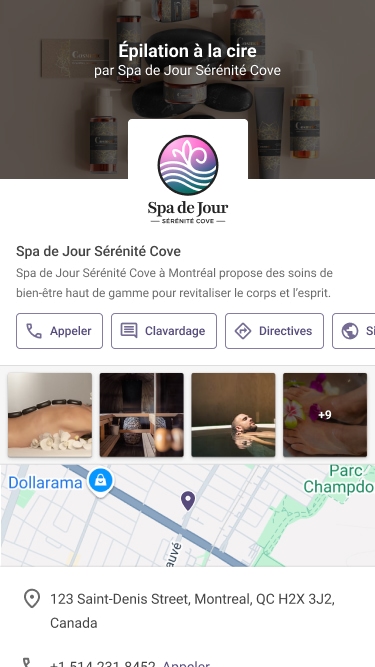
Designed a responsive UI that handled variable text length across both languages without per-language design rework — critical for a Canadian market launch.
What I'd Protect Differently
The GTM model is a product decision
How your product is distributed can significantly impact product outcomes. The whitelabel/agency model meant our SMB end users were one degree removed — we couldn't talk to them directly, couldn't test the trust-and-transparency mechanics that would have driven direct conversion, and couldn't iterate on acquisition. I'd fight harder and earlier to resolve that tension before building begins.
Beachhead First
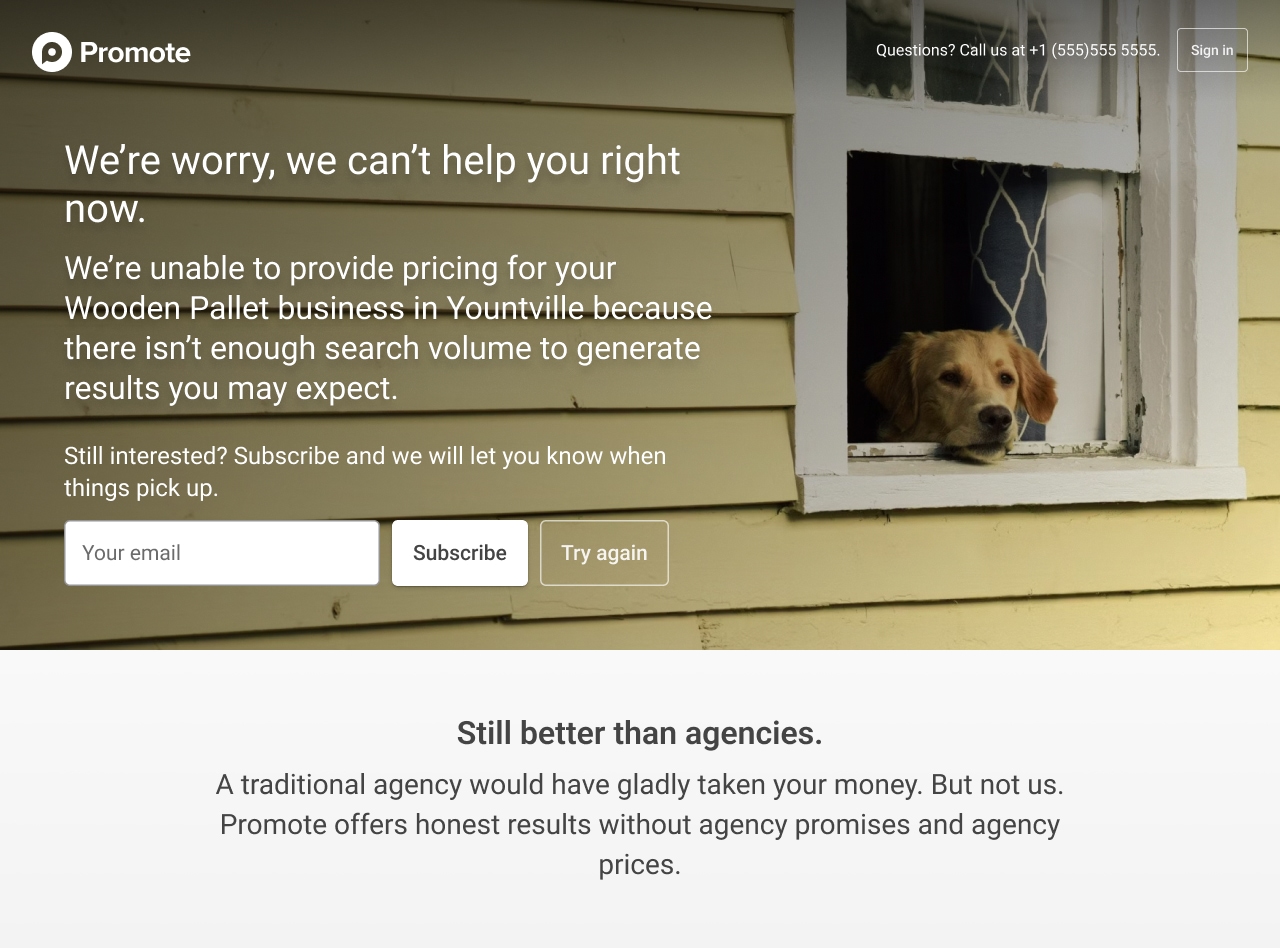
Late in the product's life, we identified that high-intent "emergency" verticals — home services, HVAC, plumbing — were our strongest candidates for a focused launch. We called them "oh shit" verticals internally. The reason was simple: depending on the geolocation, these categories generated enough consistent search volume for the ML to learn from effectively. Thin-volume verticals starved the model. We found the right wedge. We just found it too late to focus on it before we'd already committed to scaling across 300+ verticals prematurely.
Depth Before Breadth
Scaling to hundreds of verticals diluted the ML's performance and our focus. The data was telling us where to go deep. We went wide instead.
The Outcome
Acquisio and Promote was acquired by Web.com to solve for ad performance and to address a gap in their SMB advertising offering. The product shipped. The original vision didn't — but the lessons have been more useful than a clean win would have been.
Let's connect
I'm always up for a chat about design, working together, and .
Forked from resume-template and subsequently hand-adapted by Francis Wu © 2026